


Literary Essays Hack - Because Planning is Better than 'Nothing'!


Literary essays in an ideal world…
Yeah…righto.
The hack? Just PLAN!
Even the hardest working students find the thought of writing a practice essay (for exam preparation) overwhelming. They’re having to think of:
The content – details about that text study.
Essay structure
And planning, writing, editing…they’re all so time-consuming!
Here’s the workaround: just have your students plan their essays.
Three key points + evidence

Three ‘meaty’ paragraphs where each point is well developed with explanation and critical thinking, and supported with relevant evidence from the text – are better than three ‘skinny’ paragraphs that scrape the surface.
Adding a column for evidence in a plan means students:
Appreciate the need to include evidence in every paragraph and that it must align to their key point.
Don’t get to paragraph three once they actually write an essay and realise the evidence they need has already been used for paragraph one.
Why just the planning?
Planning is less overwhelming (see above).
Students can get through more essay questions this way, so they’re doing more thinking about their text study – many different aspects and angles.
Students become more familiar with a range of essay questions/statements (the types of things asked, the language used, and the structure of the questions/statements).
If you’re checking work, it’s less marking for you.

Logistics – how to run things

Have students draw up their own planning tables. Quick and easy like you see in the picture on the right – scrap paper will do! They need:
Note well - once students start planning, in the points column, students should:
Begin with their key point.
Bullet point a few further notes regarding that point.
…and you might like to introduce this one after they’ve completed one or two plans (scaffolding!)…
Include at least one bullet point that shows critical thinking. Eg, a note about:
A link to another text or literary tradition.
What’s illustrated about human nature.
How this relates to our world – the past, present or our possible future.
Audience/reader reactions.
Creator’s purpose.
Hot tips!
⭐ Have students add a star at the bottom of each cell in the points column (see image above). When they’ve included a point that shows critical thinking, they can colour the star.
⭐ Alternatively, have students use stars instead of bullet points if they believe a note shows their critical thinking.

Fun ideas to offer support
Students can work individually, in pairs or small groups of three.
You can give time-limits or offer rewards.
Add roamers – pick five students to be ‘roamers’ (or supporters – whatever you want to call them). These students roam around the room, helping others think of key points, extra information (explanation, links to wider world etc) and suggestions re evidence.
Run what I call a pillage and plunder time. Students leave their planning on their desk. They then whip around other desks, getting ideas from others’ work and running back and forth to add those ideas to their own plans. I give them a time limit (eg, two minutes). They might then have another five minutes to work on their plans, then we pillage and plunder again for two minutes before we’re done. Students LOVE this.
Scrappy gold!
Give the impression this’ll be great fun! You could get students to staple the corner of 5 to10 sheets so that they’re creating what I call ‘scrappy gold’ – it might not be pretty but it 👏 is 👏 gold, people! Keen beans can add a title page if they like. Do make a show of storing it safely! Remember: gold! This little booklet isn’t just practice, it’s study notes.
Heck, when you think about it, it’s practically a book of ‘the answers’!
‘Building on’ with just ONE paragraph.

Once students are confident with planning, hopefully on their own after a few scaffolded steps (see fun ideas above), you can have them write just ONE PARAGRAPH. They need only choose ONE ROW to build their paragraph. I give students a list of what I want to see in a paragraph. Why is this a great idea?
Students are less overwhelmed with the thought of writing one paragraph than they are with a complete essay.
In fact, students are practicing the most important part anyway: the structure of a body paragraph. Once they have this down pat, they can easily repeat it two more times to develop the complete body of an essay.
It makes sense because what’s the point in students writing three paragraphs if they just repeat the same mistakes in every one of them?
YOU have more time to offer constructive feedback because you’re reading only one paragraph, not a complete essay.
A good set of notes!

To plan essays – to study – students need a good set of notes and they need these in hard copy. Worksheets scattered all around Google Classroom aren’t notes. Notes should be compiled throughout a text study as you teach each aspect of the text – a combination of notes copied or glued into books and activities. Back to books, right?!
From there, students process those notes.
They begin by highlighting, making notes in margins, rewriting key points, listing evidence, creating main idea infographics and so on.
Then, they’re ready to plan some essays because they have the information they need to hand.
For further useful (editable) resources on our website:

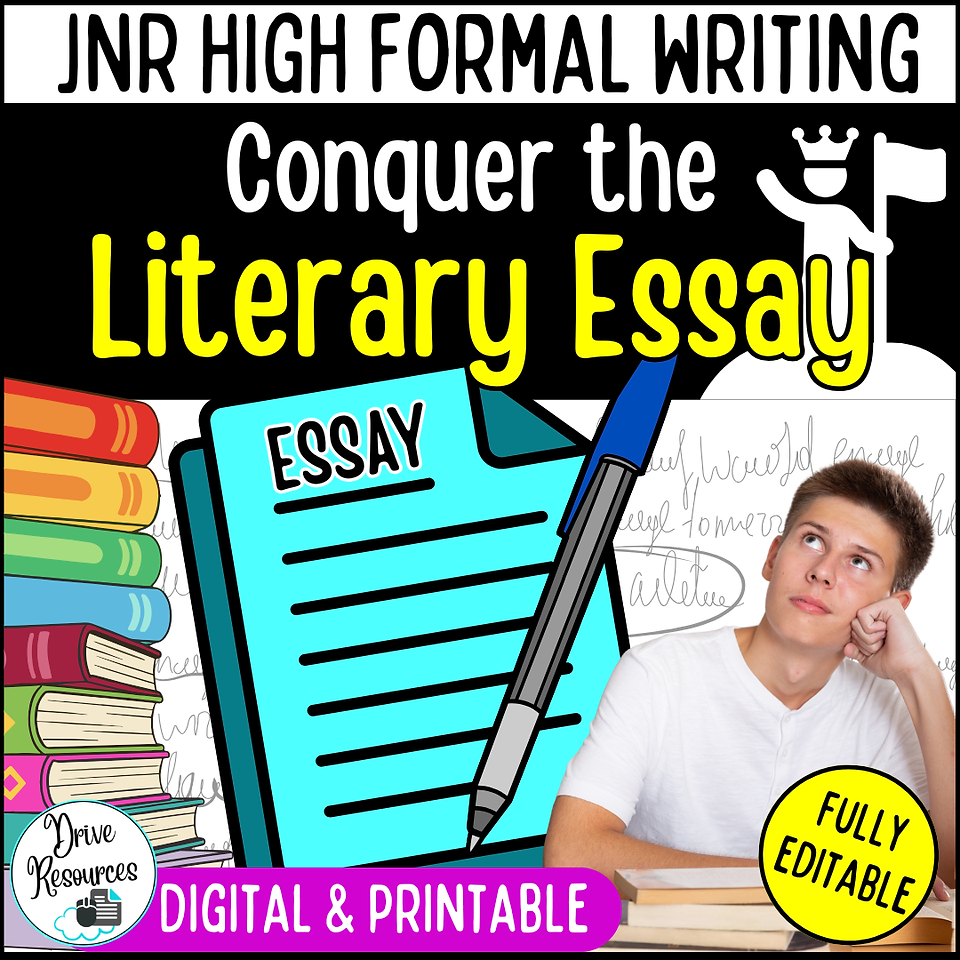


For further useful (editable) resources in our TPT store:

Note: NZ year level and US grade level checklist options above.
STAY IN THE KNOW!
✿ Subscribe to our YouTube channel
✿ Follow us on TikTok
✿ Follow us on Instagram
✿ Follow our Facebook page
✿ Follow us on TPT.
📬Add some joy to your inbox📬
🥝 NZ Teachers, click here to subscribe for teaching tips and our latest products (or log in to the website then you can access our Freebies library too)!
🌎 Teachers from other parts of the world, click here to subscribe for teaching tips and our latest plus get instant access to our bank of freebies!


Comments